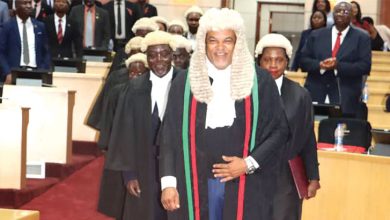
The State-of-the-Nation Addre s s (Sona) by President Peter Mutharika last Friday was an important moment in setting the vision and direction of the new Democratic Progressive Party government.
In all fairness, the President deserves appreciation for clearly outlining his government’s priorities and progress made so far. What Malawians now expect is to see concrete actions from these commitments to make a difference in their daily lives.
On the other hand, a spiritual concern also deserves attention with due respect. In recalling his inauguration speech, the President said that Malawi’s crisis is man-made and can be solved by human effort. While human solutions are important, as a God-fearing nation, our efforts are most effective when rooted and aligned in God, not man.
The scriptures remind us of the balance between divine guidance and human action. The Bible teaches, in Psalm 127:1: “Unless the Lord builds the house, the builders labour in vain”. This verse does not dismiss human responsibility; rather, it emphasises that human effort is most fruitful when we involve God, the Alpha and the Omega.
Therefore, presidential advisers have a role not only in providing technical policy guidance but also in offering moral and spiritual counsel. As a God-fearing nation, not encouraging the President to put God first in national affairs is misguiding him. A country or leader that does not place God at the centre as the ultimate builder risks greater struggle and possible failure.
Back to the Sona, the highlighted health commitments are commendable. Improved availability of essential medicines, together with the K17 billion increase in the health budget and an additional K5 billion for child vaccines, demonstrates serious government commitment and ownership of the health agenda. The planned introduction of dialysis services at Mzuzu Central Hospital is equally welcome and long overdue for many who have struggled to access care at great cost and distance. This step is expected to reduce suffering and save lives in the Northern Region.
However, while government efforts are recognised, greater attention is still needed for non-communicable diseases known as NCDs such as cancer, diabetes, high blood pressure, heart disease, stroke, chronic respiratory diseases, mental health conditions, and kidney complications, among others.
NCDs are silently claiming the lives of thousands of Malawians each year. It is a reality that almost every family has a story of loss, survival, or prolonged and costly treatment. NCDs have placed a heavy financial and emotional burden on households as well as on the national health system, that makes increased and sustained investment non-negotiable.
And, again, dialysis services should not be limited to a few regional locations. These services need to be expanded to more districts so that patients can access care more easily and affordably. There is also a strong case for investing heavily in advanced treatment facilities locally, rather than spending billions of taxpayers’ money sending selected lucky few patients to India for treatment. Developing high quality facilities here at home would serve far more Malawians. Health is a right, not a privilege for the few.
In the same spi r i t , politicians, especially members of Parliament, should support increased health budgets and reforms without unnecessary resistance when advocates raise them. NCDs affect many leaders and citizens alike, and many, should strengthen the commitment to massive health investment.
This Sona has shown real progress and good plans for health and other sectors. With more investment, more focus on fighting NCDs, and putting God at the centre of everything we do, the sky will l be our limit.